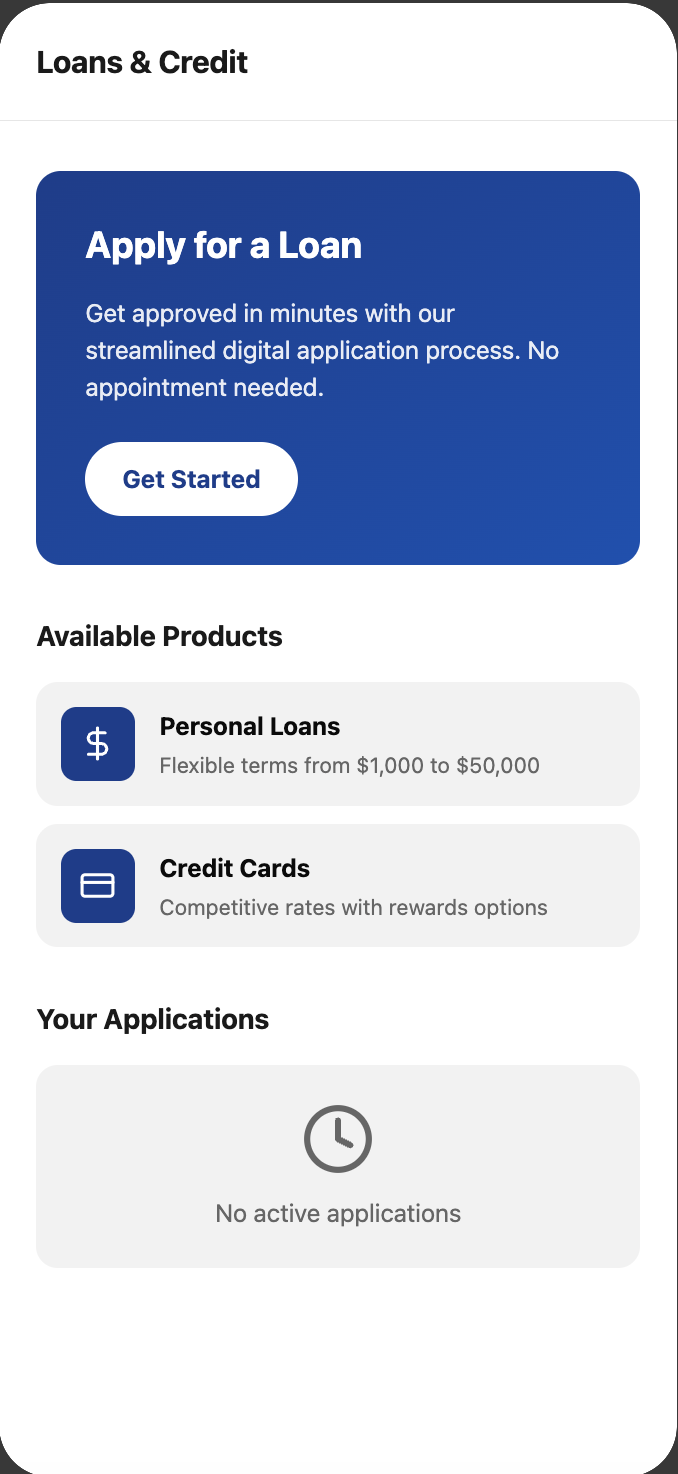
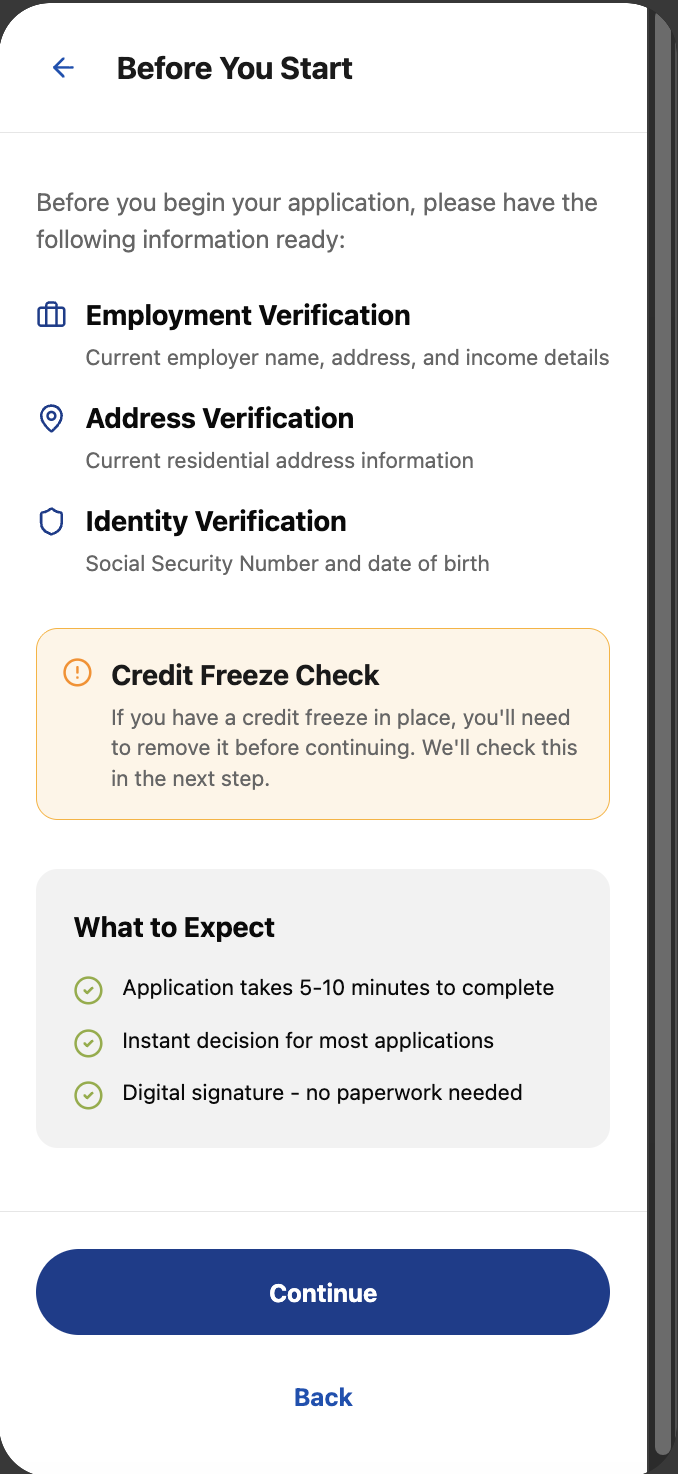
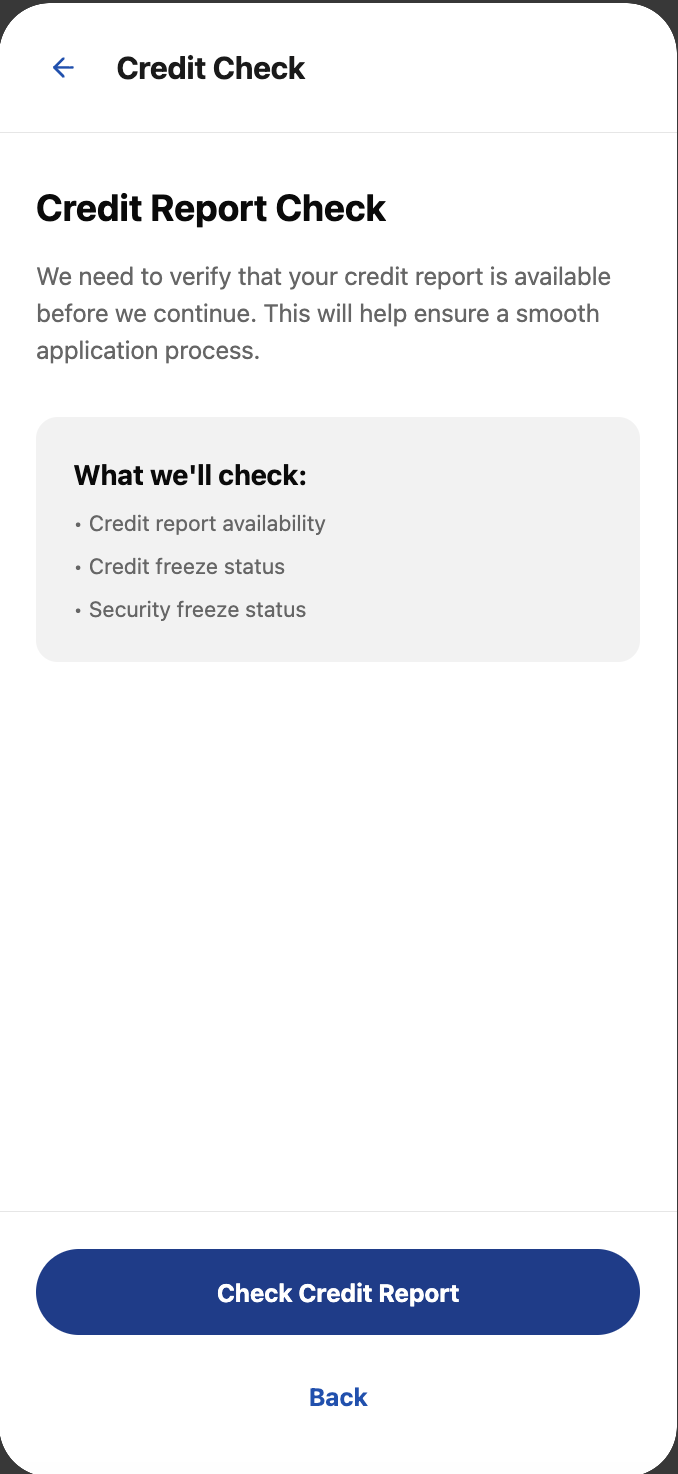
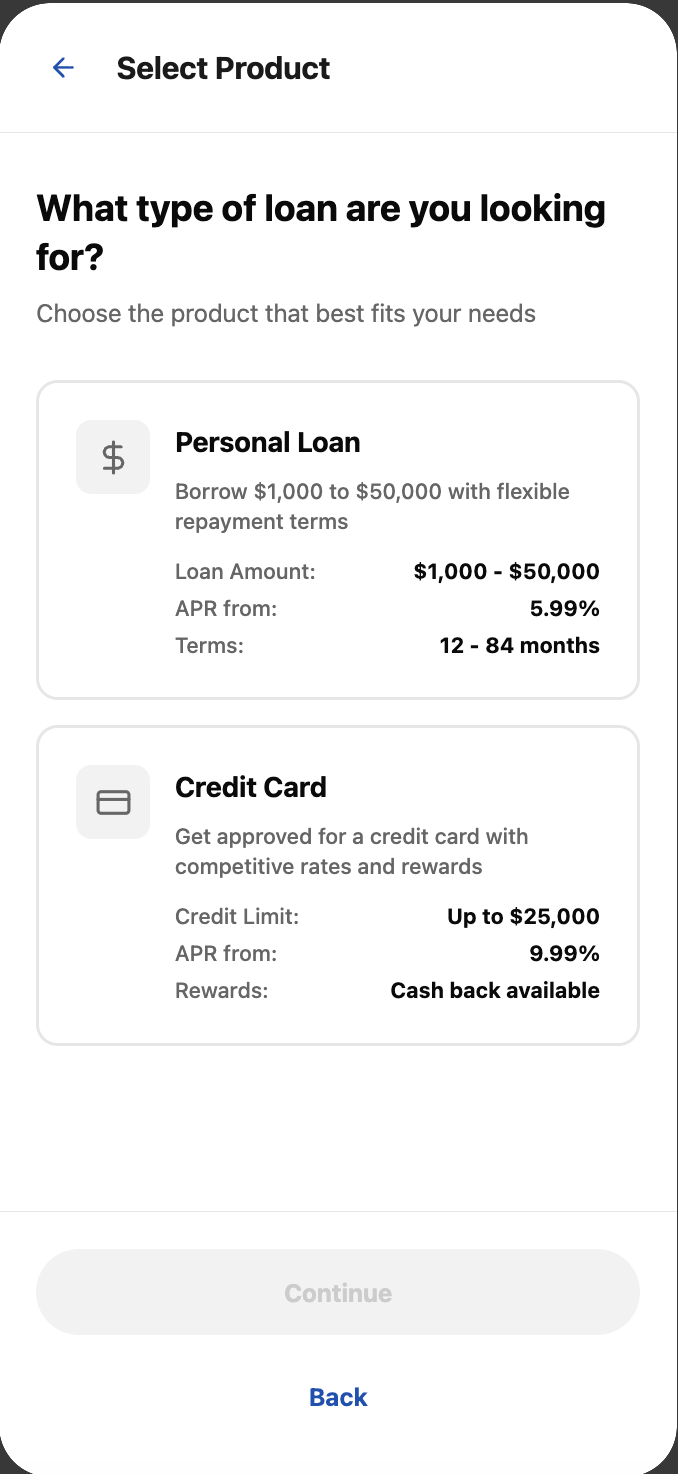
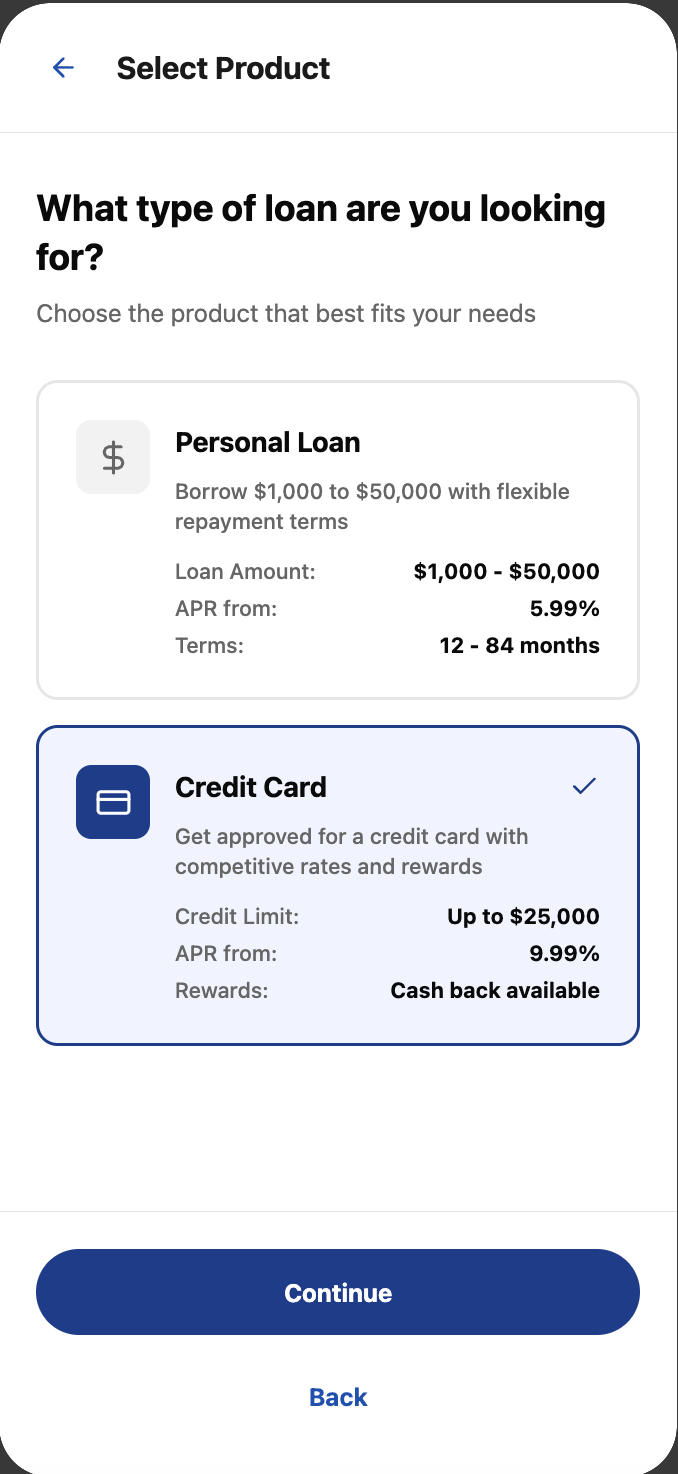
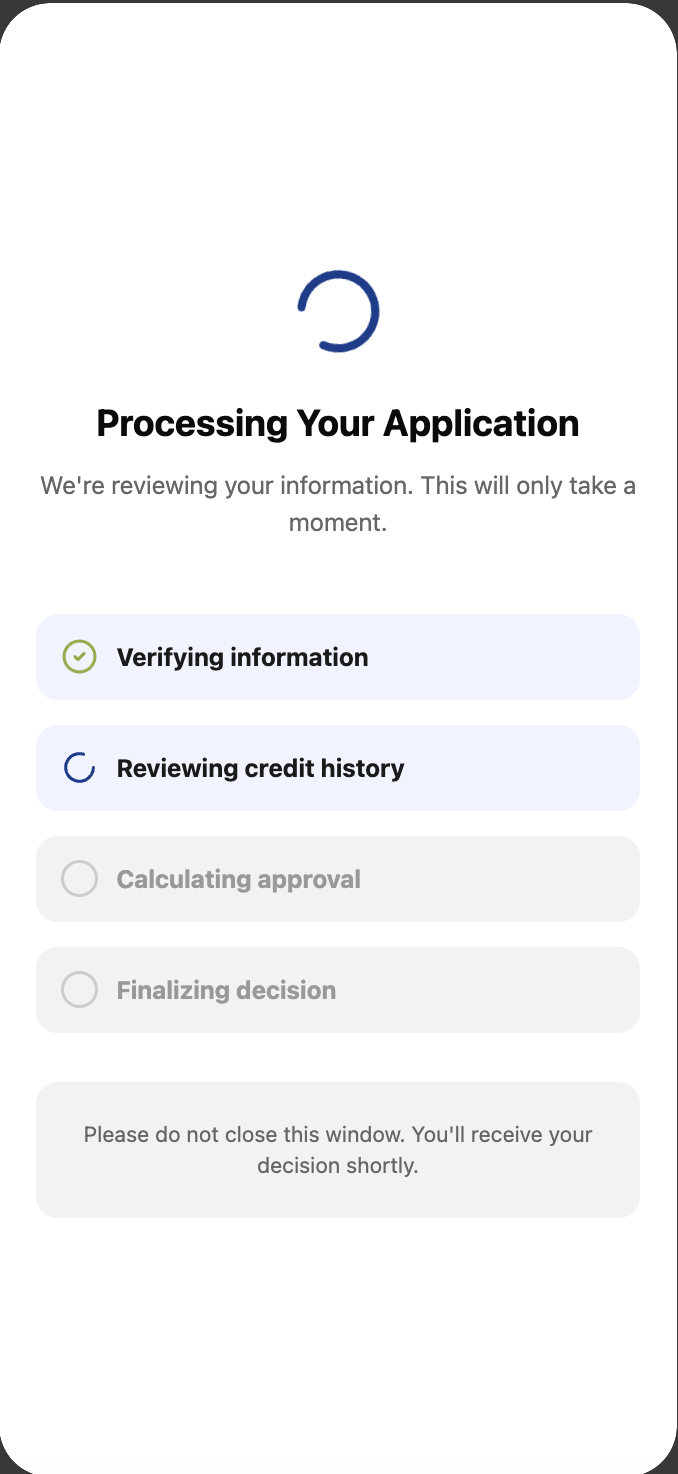
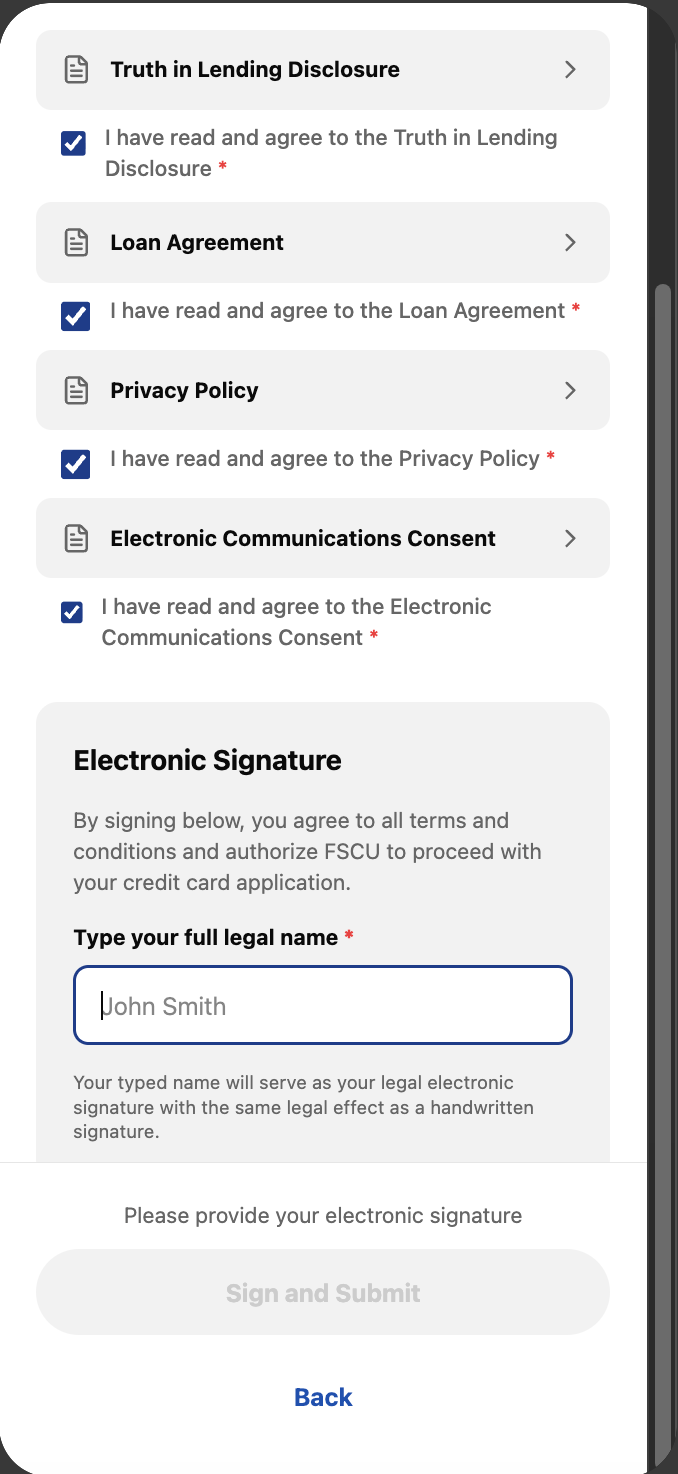
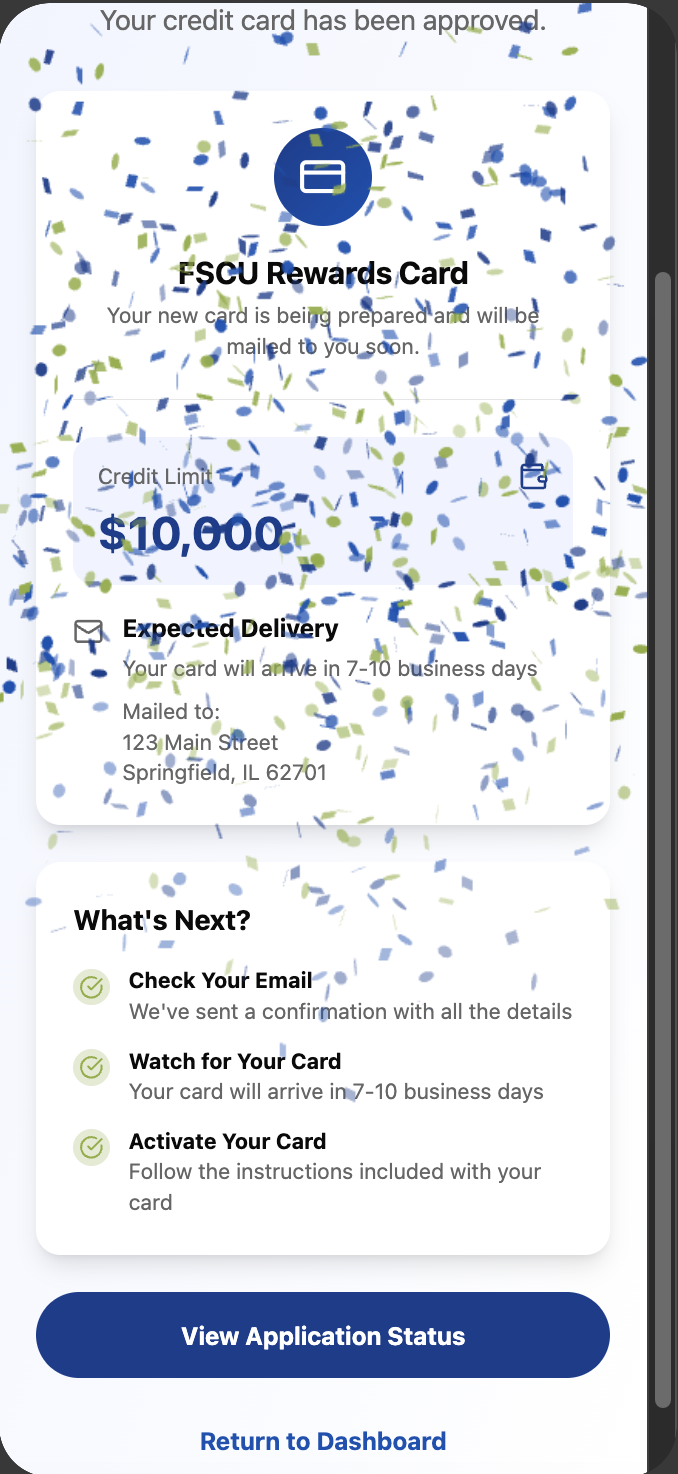
Most credit unions make members wait days for a loan decision. We designed a fully automated, AI-powered application experience that delivers an instant answer — in two steps.
While major banks have offered instant digital loan decisions for years, most credit unions still require members to call, visit a branch, or wait days for a decision. We had the technology to change that — we just needed the experience to match.
Banks have offered instant digital lending decisions for years. Credit unions are just catching up.
Members had to call or visit a branch to apply for a loan. No digital path existed.
Every application required manual staff involvement — creating bottlenecks and limiting loan volume.
Members who want credit in the moment don't want to wait. Friction means lost business.
This project had a fast timeline. Formal user research wasn't an option — so I leaned into the research approach that fit the moment: competitive analysis and best practices.
Studied how leading banks and fintechs handle digital loan applications — what information they collect, how they sequence steps, and how they communicate decisions.
Applied established patterns for multi-step financial forms — progressive disclosure, pre-population of known data, clear progress indicators, and transparent decision states.
Met with underwriting and sales teams to understand what data Zest AI actually needs to make a decision — which directly shaped how many steps the member faces.
Research confirmed that time-to-decision is the #1 driver of loan application completion. Every design decision was made through the lens of reducing friction.
Knowing when to use secondary research instead of primary research is a skill, not a shortcut. When the problem is well-established and the timeline is tight, competitive analysis and best practices get you to a strong informed solution faster. The key is being intentional about it.
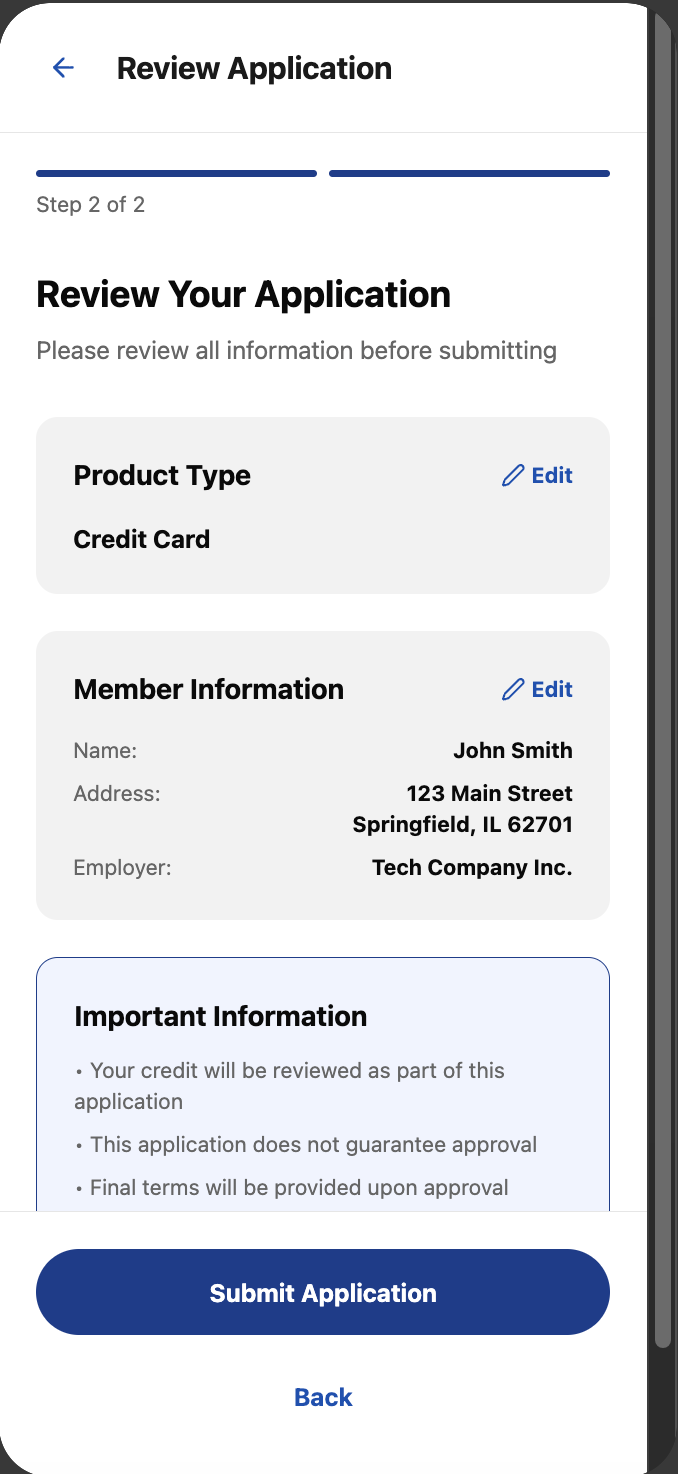
The most important design decision in this project wasn't visual — it was structural. The member-facing application is intentionally just two steps. That's not a simplification. It's the result of working backward from what Zest AI actually needs to make an automated underwriting decision.
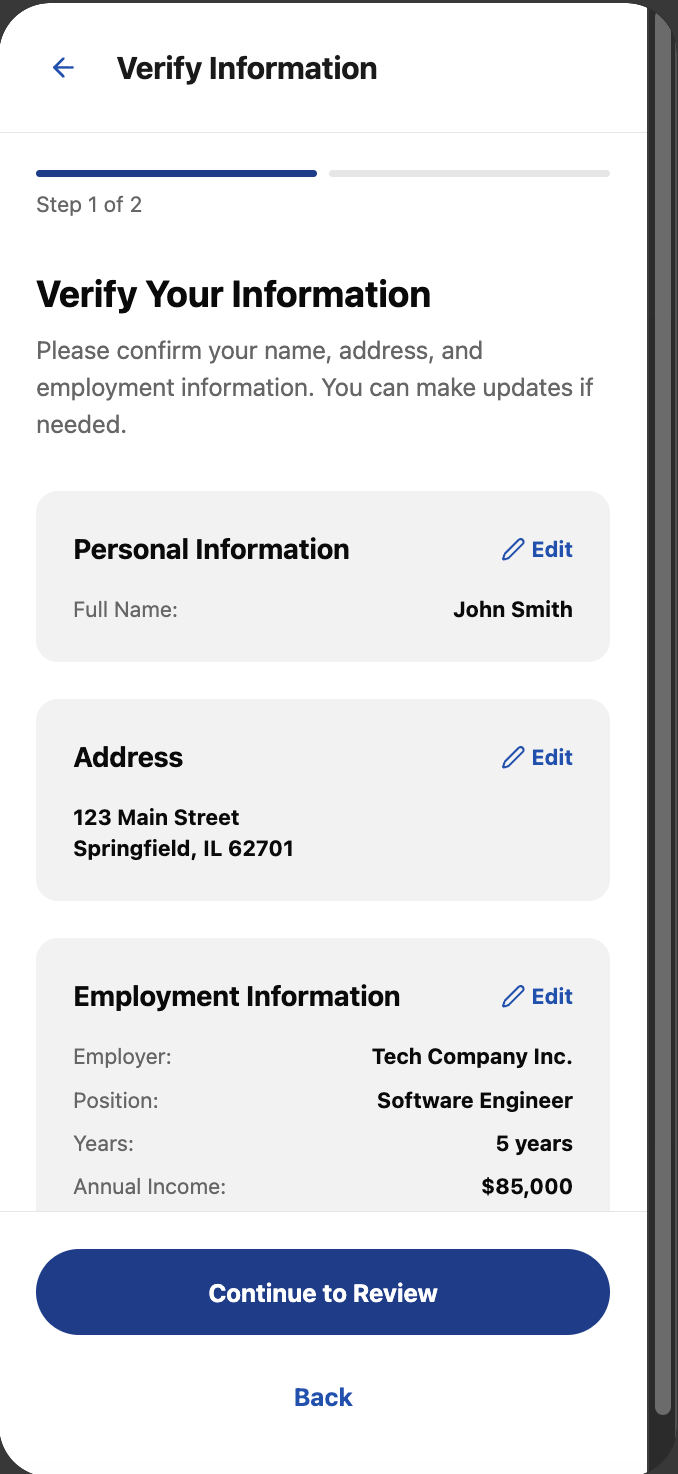
Worked with underwriting to understand exactly what data points Zest AI needs to auto-decisión. Pre-populated fields mean the member confirms, not re-enters.
Cross-functional conversations revealed that existing member data covers most underwriting requirements — reducing the ask on the member significantly.
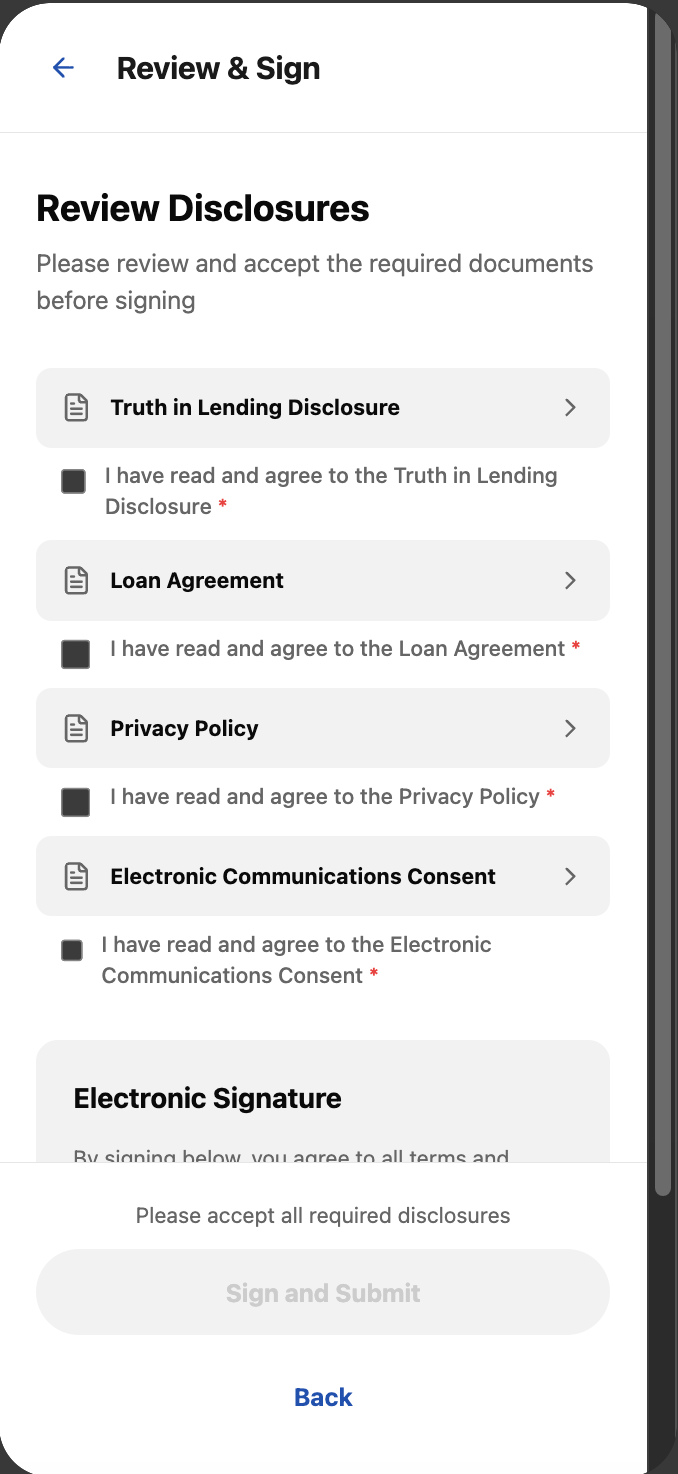
Members applying via mobile expect speed. Long forms kill completion rates. Two steps with pre-populated data is the right balance between compliance and conversion.
The workflow is already being refined further — removing additional friction points as we learn from stakeholder feedback and prepare for launch.
This wasn't just a UX project — it was an AI integration project. Zest AI handles the underwriting decision autonomously. My job was to design the member experience around what the AI needs, not what a traditional loan officer would ask for. That required a fundamentally different way of thinking about the form.
Rather than presenting lo-fi wireframes, I used Figma Make to rapidly spin up high-fidelity prototypes that stakeholders could actually feel and respond to. This approach compressed what would have been weeks of design iteration into hours and gave the team something real to react to immediately.
Instead of presenting lo-fi wireframes and asking stakeholders to imagine the final product, I used Figma Make to build high-fidelity prototypes in a fraction of the usual time. Stakeholders could tap through a real-feeling experience, which produced faster, more specific feedback and dramatically accelerated alignment. This is the future of how design presents to non-designers.
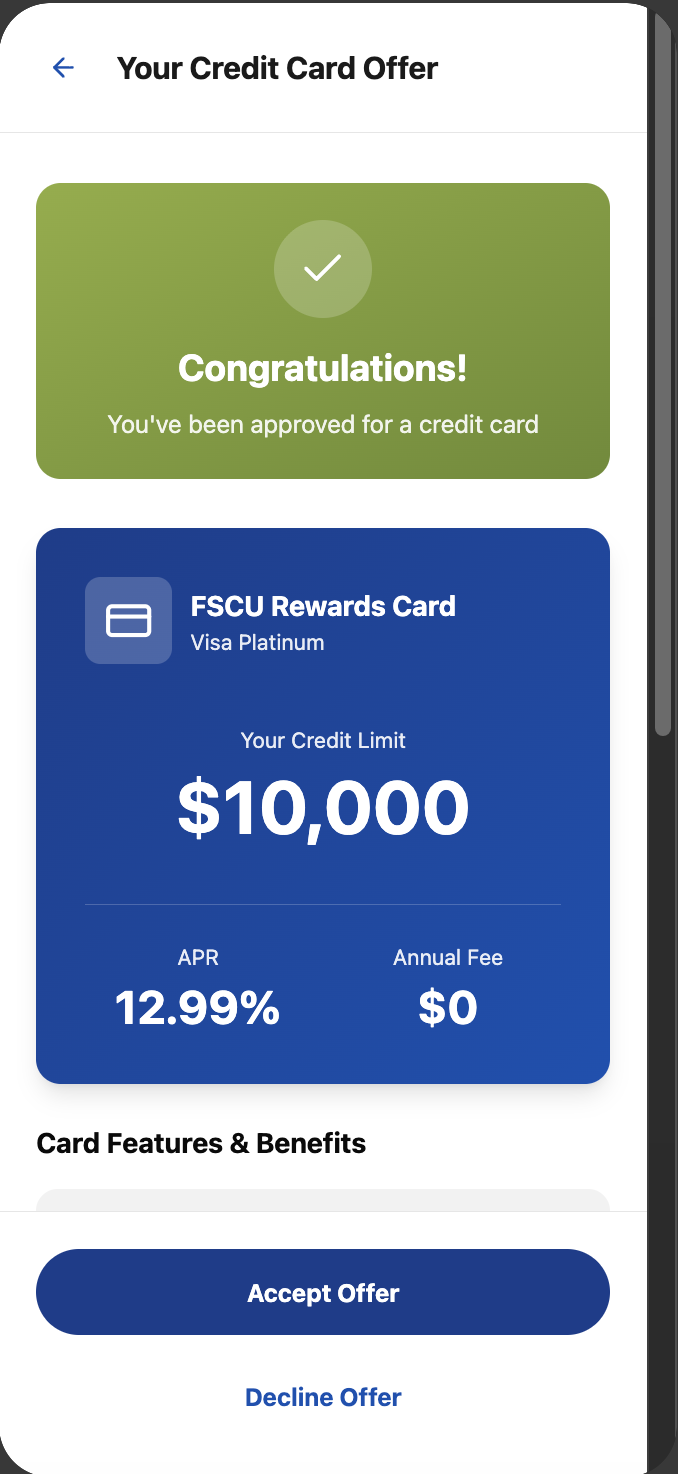
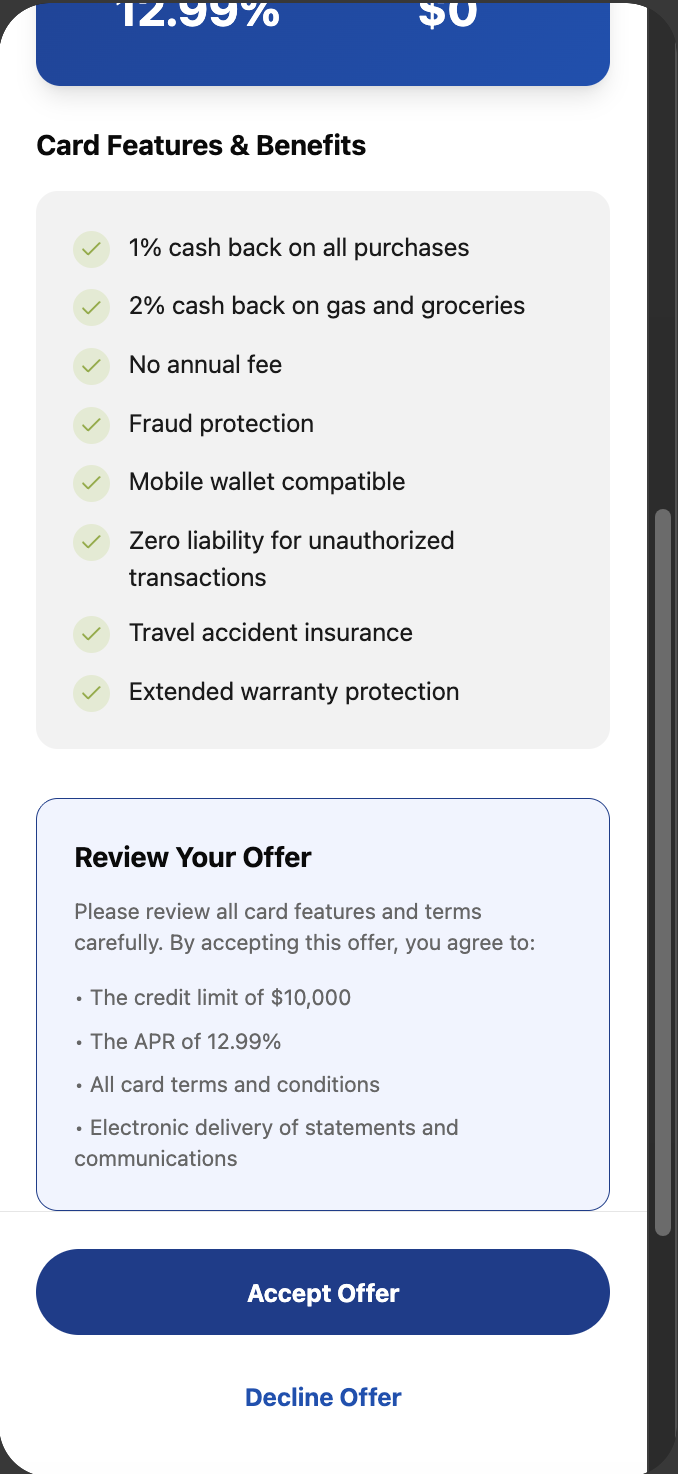
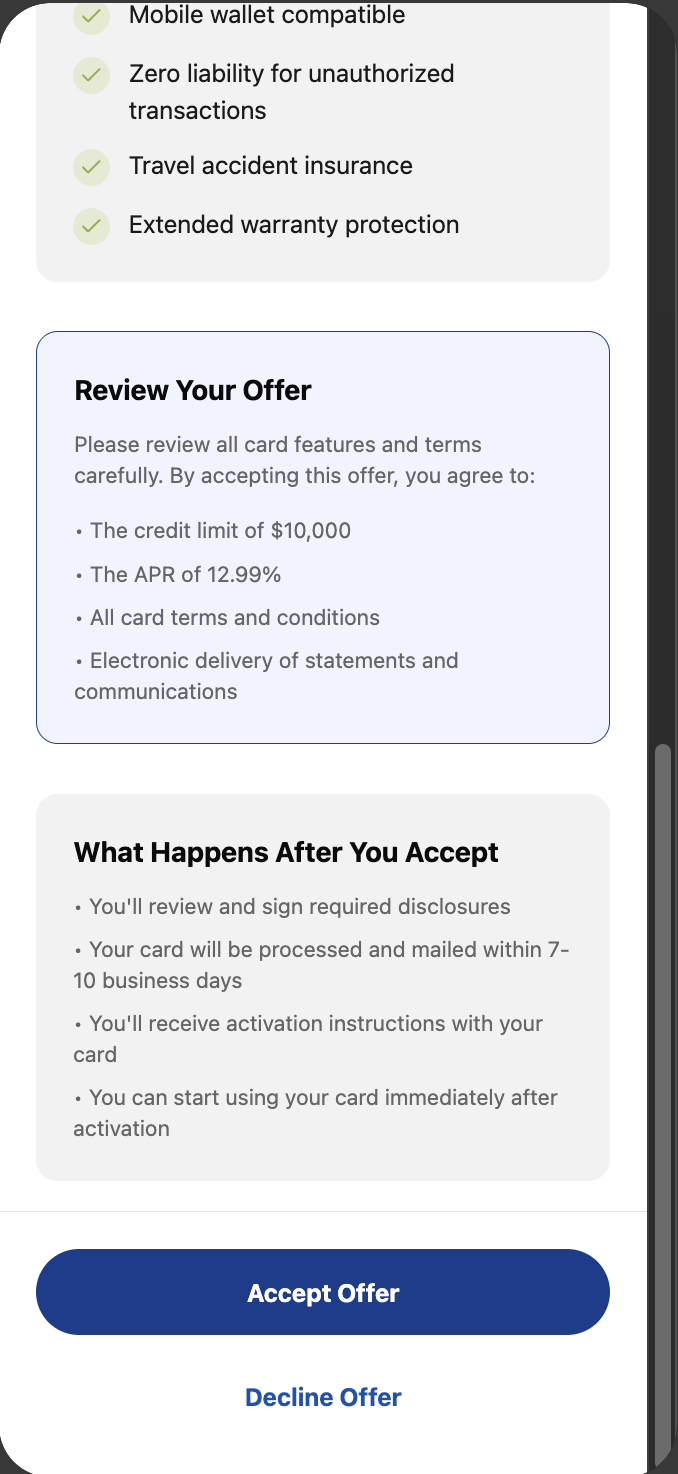
Zest AI powers automatic loan decisioning — members get an answer in seconds, not days. No staff intervention required for standard applications.
The entire application is two steps. Pre-populated data means members confirm rather than re-enter, dramatically reducing friction and drop-off.
Automated decisioning frees staff from routine application processing, allowing them to focus on complex cases and member relationships.
First Service will be able to offer what major banks have had for years — instant digital lending decisions directly inside the member's banking app.